
Moving guide · Planning and timing
Moving in a Connecticut winter
A January move is easier to book and harder to run. Snow, ice, short days and parking bans all change how the day goes, and most of the problems are avoidable with a week of preparation.
The short answer
You can move in a Connecticut winter without trouble if you clear and salt every path the crew will walk, plan for the parking ban rules in your town, protect the floors at both ends, and pack the things that cannot freeze so they ride in a car rather than the truck.
Winter is the quiet season for movers in Connecticut, which is the good news: dates are easier to get and the crew is not coming off a month-end run. The trade is that everything about the day takes a little more planning. Daylight is short, the driveway may be ice, and the town may have a parking ban in force on the morning you need the truck at the curb.
None of this is a reason to avoid a winter move. It is a reason to prepare for one, and the preparation is mostly ordinary household work done a few days early.
Clear every path the crew will walk
The single most useful thing you can do is shovel and salt the route from the door to where the truck will park, at both addresses, before the crew arrives. That includes the steps, the walk, the driveway apron, and the strip of street where the ramp will come down. A crew carrying a dresser cannot see its feet, and a patch of ice under a drop cloth is how furniture and people get hurt.
If you are moving out of a building, ask the management who clears the loading area and when. If the answer is nobody, plan to do it yourself or arrange it, because the crew will not start loading across ice.
Know the snow rules in your town
New Haven and most of the towns around it declare parking bans during snow emergencies, and cars parked on the wrong side of a posted street get towed. A move scheduled into a storm needs a plan for where the truck will go, and a move scheduled the day after one needs the curb to have been cleared of both snow and plowed-in cars.
Watch the forecast during the week before the move. If a storm threatens the route or loading area, contact the mover early. Ask what options are available and what booking terms apply; another date depends on the crew, property access and your own arrangements.
Protect the floors and the doorways
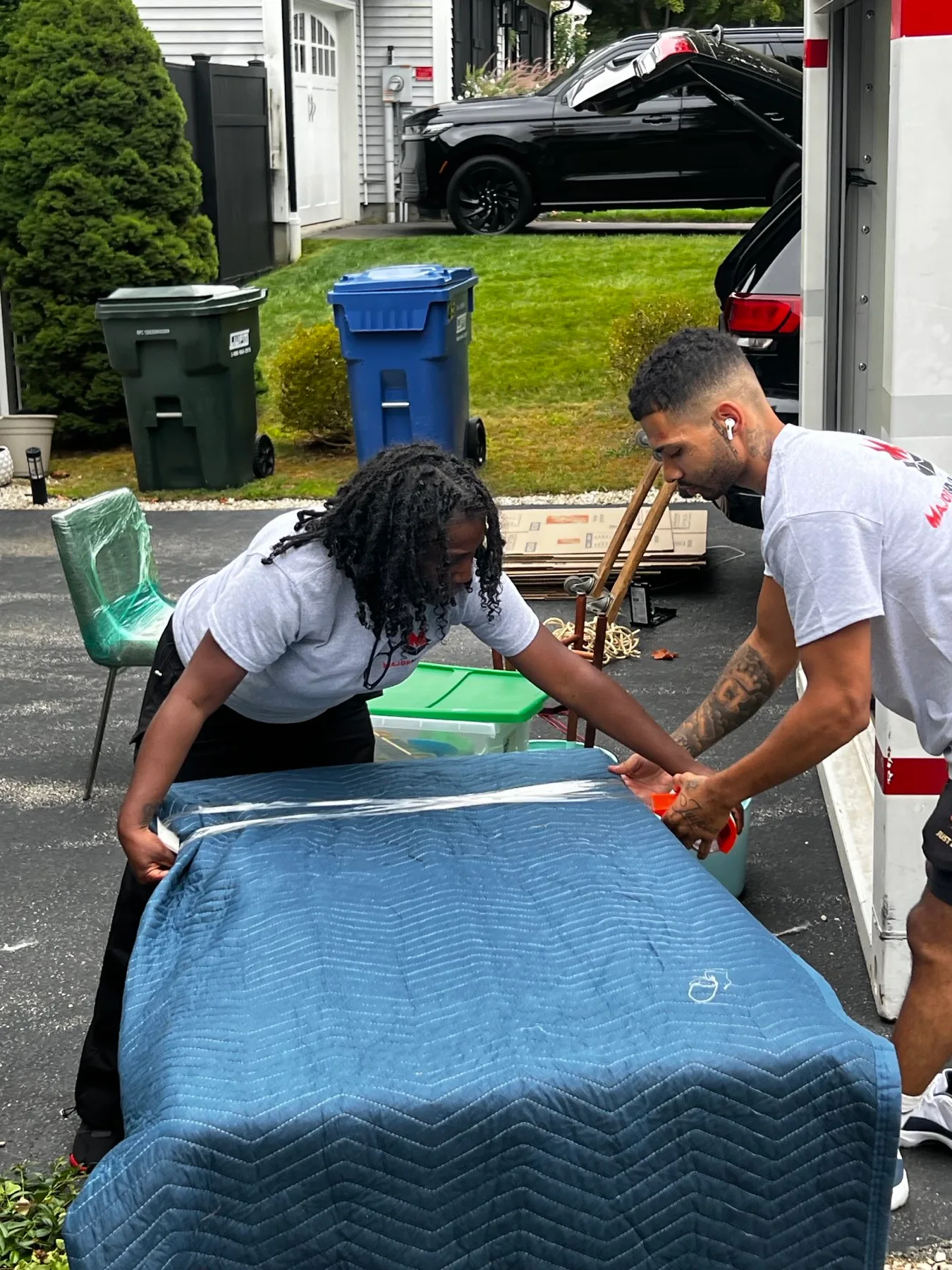
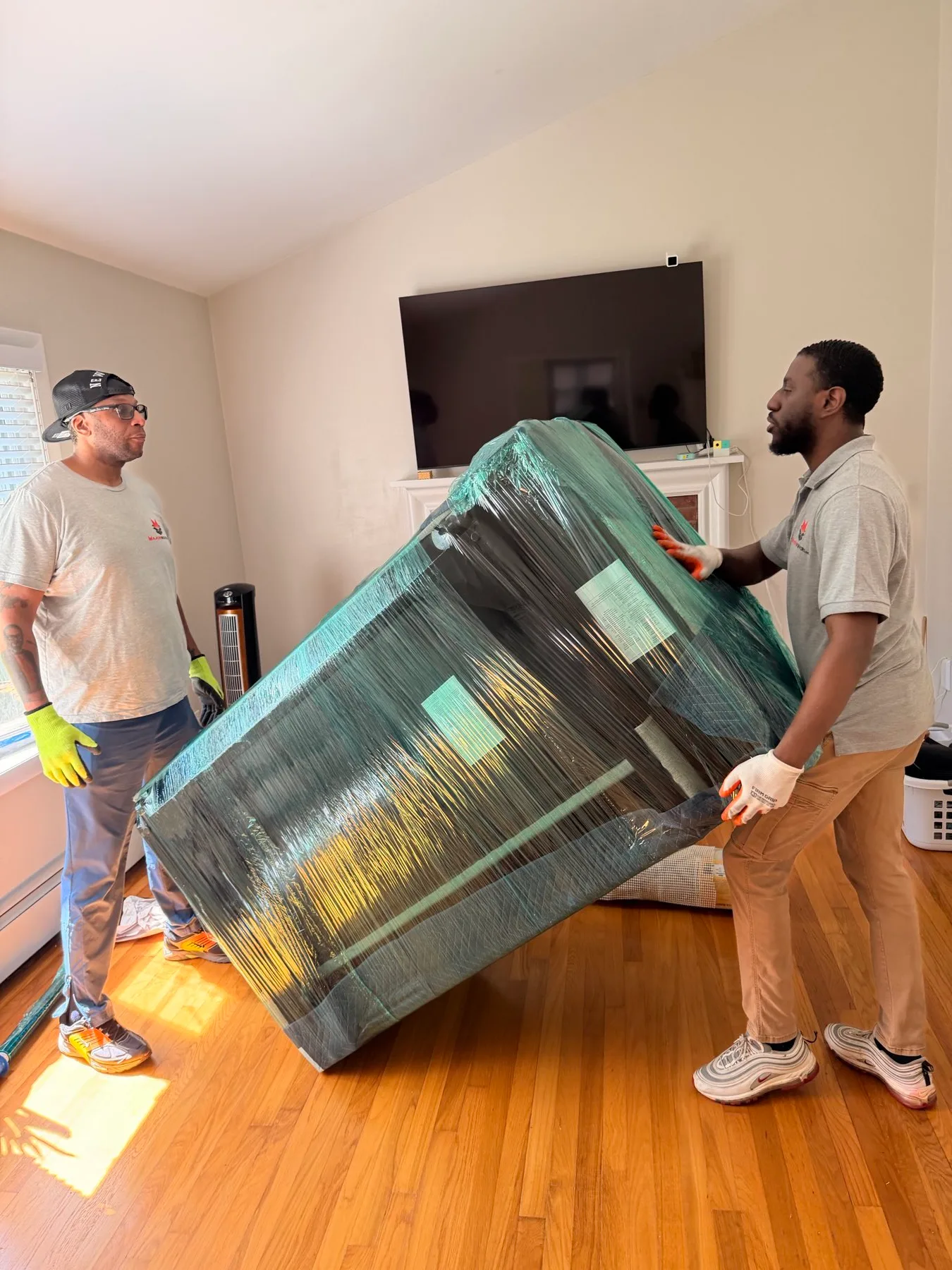
Salt, slush and grit come in on every trip. Put down runners or flattened cardboard from the door along the main route, tape the edges so they do not lift, and keep an old towel at each threshold. At the new place, do the same before the first box comes in. A crew that wraps furniture in blankets and stretch wrap, as the Major Movers crew does, is protecting the furniture; the floors are yours to protect.
Prop the doors if you can, but keep the heat on. Cold rooms slow everything down, and if you are moving out of a property that will sit empty, leave the thermostat set low rather than off so the pipes do not freeze between your move and the next occupant.
Separate what cannot ride in a cold truck
The back of a box truck is close to outdoor temperature. Most household goods do not mind, and some do: houseplants, liquid medicines, wine, paint, cleaning products, electronics with batteries, and anything else that a hard freeze would ruin. Pack these separately and take them in a heated car.
Appliances need a thought too. A washing machine that still has water in it can freeze in the truck; drain it the day before. A refrigerator should be defrosted and dried, which takes longer than people expect. The packing and unpacking page covers what the crew can take on if you want the kitchen done for you.
- Houseplants, and anything else alive
- Medicines, especially liquids
- Paint, adhesives and cleaning products
- Wine, canned goods and anything in glass
- Laptops, phones and battery-powered devices
Plan around the short day
Sunset comes early in a Connecticut January, and unloading in the dark on an icy walk is slower and riskier than the same job in daylight. Ask for an early start, have the exterior lights working at both ends, and keep a couple of flashlights near the door. The more of the move that happens in daylight, the better the day goes.
Dress for it, and keep the kettle on. The crew is working hard and will be fine; the person standing in the doorway directing boxes is the one who gets cold.
The week before a winter move
- Check the forecast and the town's snow emergency page.
- Confirm where the truck can park under any parking ban.
- Buy salt and put a shovel by the door at both addresses.
- Drain the washing machine and defrost the refrigerator.
- Pack a separate car box for plants, medicines, paint and electronics.
- Lay runners along the main route and tape the edges.
- Ask for an early start and check the outdoor lights.
Common questions
General guidance. Your own route, date and access still need confirming directly.
Do movers work in the snow?
Ask the moving team to assess the route and loading conditions. Clear and treat the agreed access paths, check local parking restrictions and discuss forecast storms early. The team must confirm whether the move can proceed safely or needs to be rescheduled.
Is winter a cheaper time to move in Connecticut?
It is a quieter time, which makes dates easier to book. Whether it changes the price is a question for the quote; Major Movers confirms pricing for your specific date and route when it follows up on your request.
What should not go in the moving truck in winter?
Anything that a hard freeze would damage: houseplants, liquid medicines, paint, cleaning products, wine and other liquids in glass, and electronics with batteries. Take those in a heated car.
Who is responsible for clearing the snow on moving day?
At a house, you are. At a managed building, ask the management, and if nobody is assigned to it, arrange it yourself. The crew will not load across ice, so an uncleared path delays the move at your expense.
Sources and useful references
- National Weather Service: winter safety
Check current weather alerts and winter travel guidance before your moving date.
Planning a move?
Get a quote from Major Movers.
Share the route, the date and the help you need, and someone follows up to confirm the details and availability. Based in Hamden, serving all of Connecticut.
Read next
The guides people open after this one.

Ready when you are
Make the next move feel manageable.
Send your move details in a couple of minutes, or call and talk it through.