
Moving guide · Hiring a mover
What Won't Movers Move? Items to Plan For
Every moving company keeps a short list of things it will not put on the truck, and most of them are there for safety. Knowing the list early saves a scramble on moving day.
The short answer
Movers generally will not load hazardous materials such as gasoline, propane cylinders, paint thinner, pool chemicals and fireworks, and they advise against putting perishable food, plants, pets, cash, jewelry and important documents in the truck. Some heavy specialty items need a separate assessment. Ask your mover for its own list when you book.
The reasons are practical. A closed truck gets hot in summer and cold in winter, loads shift on the road, and a leak from one container can ruin everything packed around it. What follows is general guidance for Connecticut households. Major Movers confirms its own requirements with you when the move is booked, so treat this as the list of questions to ask, not the final word.
Which hazardous materials stay off the truck?
Anything flammable, corrosive or under pressure. Movers do not want it near your furniture, and neither do you. Walk the garage, the shed and the basement a few weeks before the move, because that is where most of it lives.
- Gasoline, oil and the fuel left in a lawn mower, snow blower, leaf blower or generator
- Propane cylinders from the grill or a patio heater
- Paint thinner, solvents, oil-based stains and varnish
- Pool chlorine and other pool and spa chemicals
- Lighter fluid, kerosene, fireworks and ammunition
- Car batteries, fertilizers, pesticides and weed killers
- Aerosol cans in any quantity
How do you get rid of hazardous items before a move?
Start early, because the collection options run on their own calendar. Use up or give away what you can: a neighbor will usually take half a bag of fertilizer or a spare can of deck stain. Drain fuel from equipment the way its manual describes, or ask your mover whether the machine can travel and how it must be prepared.
For the rest, Connecticut's Department of Energy and Environmental Protection lists household hazardous waste programs. Most towns hold collection days or share a regional facility, and each one sets its own rules for accepted materials, dates and who may drop off. Check your town's program before you load anything into the car. Propane suppliers and hardware stores often run exchange or return programs for grill cylinders.
What should travel with you instead of in the truck?
Some things are not dangerous at all; they just belong in your car. Cash, jewelry, passports, birth certificates, closing papers, checkbooks, prescription medication, laptops holding work files and every set of keys should ride with you. So should the things you cannot replace: photo albums, family papers, a hard drive of pictures.
The reason is not that a crew will lose them. It is that the truck is the wrong place for anything you cannot replace, or anything you will need before the last box comes off. Pack one bag for the day and the first night, and keep it separate from the load. The moving-day essentials list covers what to put in it.
What about food, plants and pets?
Perishable food spoils in a closed truck, and open bottles leak. Eat down the fridge and freezer in the last two weeks, give away what is left, and pack sealed pantry items only if your mover agrees to take them. Defrost and dry the freezer a day ahead so it does not drip on everything loaded beside it.
Houseplants suffer in the heat or cold of a truck, and soil spills when pots tip. Move them in your own car where you can. Pets never go in the moving truck. Keep them in a closed room or with a friend while the crew works; the guide to moving day with pets walks through it.
Which heavy or specialty items need a separate conversation?
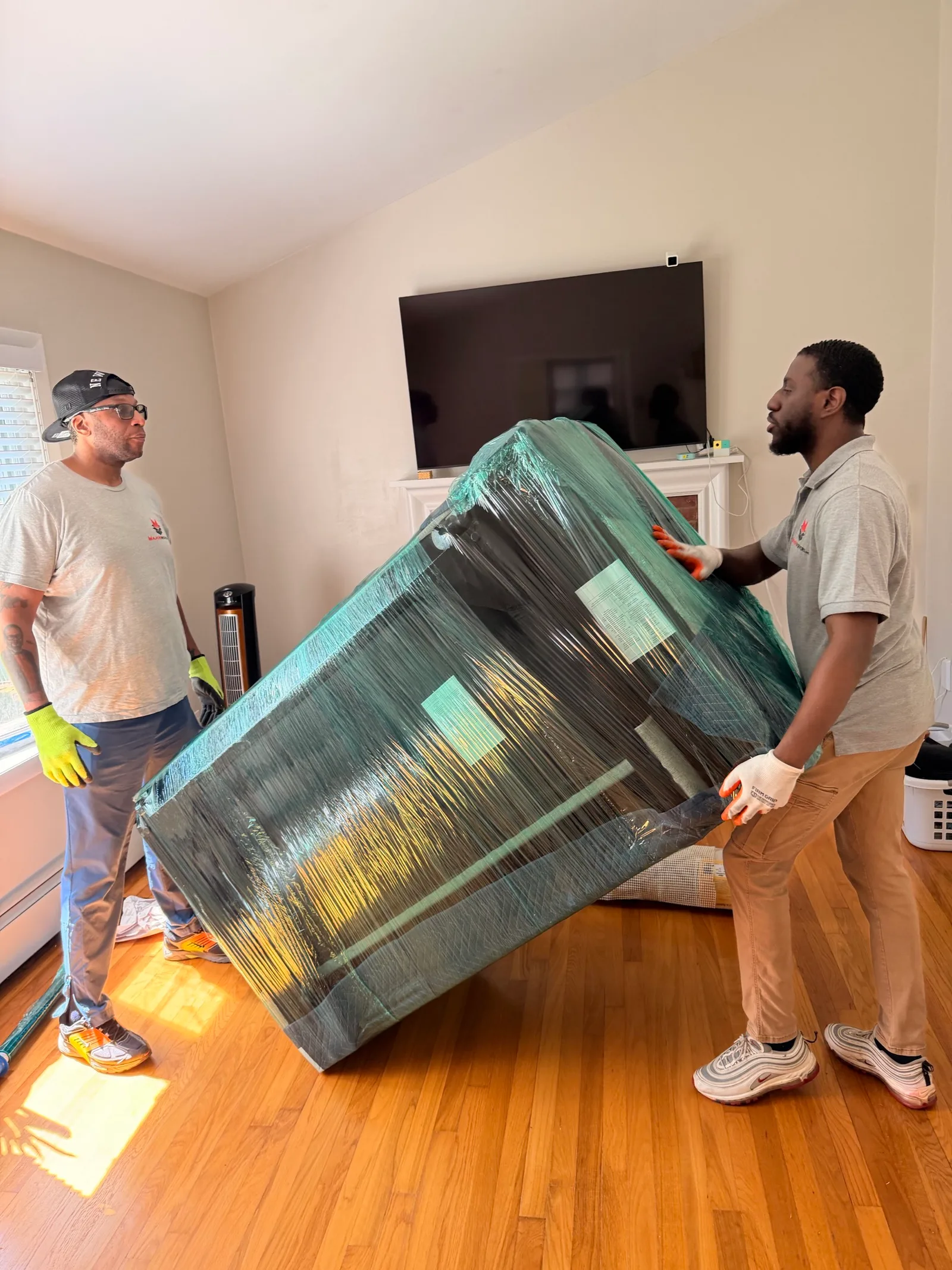
Pianos, gun safes, hot tubs, pool tables, large aquariums, slate or stone tops and oversized glass are not automatic refusals, but each needs its own assessment: the weight, the route out of the house, the stairs and whether special equipment is needed. Send photos and model details with your estimate request rather than mentioning them on the day, when the crew may not have the right gear on the truck.
Appliances are a similar case. The crew can move a washer, dryer or refrigerator as part of a residential move, but gas lines, water connections and dedicated wiring should be disconnected by the right tradesperson before moving day. Drain washer hoses, and leave the fridge door ajar once it is dry.
What happens to the things you are not moving at all?
Label anything staying behind: the landlord's furniture, appliances sold with the house, items for a buyer. Keep donation items in one room with a clear sign, so nobody loads them by mistake. If a whole basement or garage needs emptying, that is a different job from the move. Major Movers offers clean-outs separately, and hauling and disposal are confirmed in writing before booking. The guide to what a house clean-out involves explains how to sort a property first.
Three weeks before moving day
- Walk the garage, shed and basement for fuel, chemicals and propane.
- Book a household hazardous waste drop-off or collection day.
- Set aside documents, medication, valuables and keys to travel with you.
- Send photos of any piano, safe, hot tub or oversized piece with the estimate request.
- Arrange appliance disconnection with the right tradesperson.
Common questions
General guidance. Your own route, date and access still need confirming directly.
Will movers move a propane tank from a grill?
Most movers will not, because a propane cylinder is a pressurized, flammable container. Transport it yourself following the supplier's safety guidance, return or exchange it, or use your town's disposal program. Ask Major Movers about its own requirements when you book.
Can movers move a lawn mower or snow blower?
Usually yes, once the fuel and oil have been handled according to the manufacturer's instructions. Tell the team about outdoor power equipment in advance so it can confirm how the machine should be prepared.
Should I pack jewelry and important papers in the moving boxes?
No. Keep cash, jewelry, passports, closing documents, medication and anything irreplaceable with you. The truck is the wrong place for things you cannot replace or will need before unloading is finished.
Where do I get rid of paint and chemicals before a move in Connecticut?
Connecticut DEEP lists household hazardous waste programs, and most towns run collection days or share a regional facility. Check your town's program for accepted materials, dates and residency rules before you load anything into your car.
Sources and useful references
- Connecticut DEEP: household hazardous waste
Use the state guidance to identify household hazardous waste and find the appropriate local collection program.
- CTDOT: household goods movers and estimates
CTDOT explains written quotes, mover verification and questions about damage coverage.
Planning a move?
Get a quote from Major Movers.
Share the route, the date and the help you need, and someone follows up to confirm the details and availability. Based in Hamden, serving all of Connecticut.
Read next
The guides people open after this one.
Ready when you are
Make the next move feel manageable.
Send your move details in a couple of minutes, or call and talk it through.